Sunday, 30 April 2017

Prey, Injustice 2, Fire Emblem Echoes: Shadows of Valentia, and Other Games Releasing This May


    Prey, Injustice 2, Fire Emblem Echoes: Shadows of Valentia, and Other Games Releasing This May

    Highlights

    • Prey is a re-imagination of the 2006 classic by the same name
    • Injustice 2 is made by the studio behind Mortal Kombat
    • Fire Emblem Echoes is for the Nintendo 3DS
    Compared to the veritable deluge of gaming goodness the first quarter of the year, May is relatively light on games. And yet, there’s something for everyone. That is of course, if you like first-person shooters and role-playing games. Here are all the big titles headed your way in May 2017.
    Prey
    Despite having a troubled development history, Prey is finally hitting digital and physical store shelves. The game is a re-imagination of the 2006 title by the same, similar to what Mirror’s Edge: Catalyst was for Mirror’s Edge. Set on Talos I, a space station orbiting the moon, you’ll don the role of fend of aliens known as Typhon all while looking for ways to escape. Although this might sound a straightforward enough concept (much unlike its origins), Talos I is presented as an open-world and you’ll have a slew of weapons and abilities at your disposal coupled with a story penned by those behind the likes of Dishonored and Planescape: Torment.
    Prey release date: May 5
    Prey 5 platforms: Windows PC, PS4, and Xbox One
    Prey price: Rs. 3,999 ($60 in the US)
    prey 2017 cover
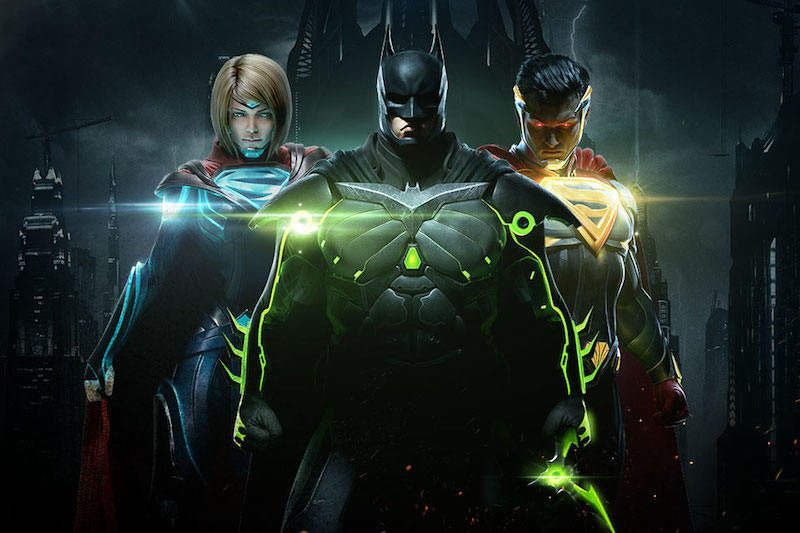
    Injustice 2
    Helmed by the studio behind the excellent Mortal Kombat series, Injustice 2 is a fighting game wherein DC superheroes and villains square off in a battle royale. While the first game’s plot could be best described as a competent alternative to Batman vs. Superman, Injustice 2 stars extraterrestrial android Brainiac as the main antagonist. Expect a generous amount of story (unlike Street Fighter V), a myriad of combos, a loot-dropping system that allows you to modify your stats, and of course a microtransaction system, not unlike Mortal Kombat X.
    Injustice 2 release date: May 16
    Injustice 2 platforms: PS4 and Xbox One
    Injustice 2 price: Rs. 3,499 ($60 in the US)
    injustice 2 flash
    Fire Emblem Echoes: Shadows of Valentia
    Aside from this role-playing strategy series’ foray into smartphones with Fire Emblem Heroes that came out earlier this year, May will see us being treated to Fire Emblem Echoes: Shadow of Valentia. It’s a complete remake of Fire Emblem Gaiden — the second entry in the franchise. While it has turn-based combat like other instalments, it also has new additions like an overworked, and towns that you can navigate.
    Fire Emblem Echoes: Shadows of Valentia release date: May 19
    Fire Emblem Echoes: Shadows of Valentia platforms: Nintendo 3DS
    Fire Emblem Echoes: Shadows of Valentia price: $40 (around Rs. 2,600)
    fire emblem echoes shadows of valentia fire_emblem
    Strafe
    With rougelikes being in vogue for many an independent developer, Strafe doesn’t seem like bucking the trend, although it does combine it with traditional first-person shooter mechanics. Starting its life as a Kickstarter project whose presentation mimicked games 90s, expect a ton of blood and gore, as well as a host of weapons such as shotguns, rocket launchers, and railgun. Until 2016’s excellent Doom gets a sequel, Strafe could suffice.
    Strafe release date: May 9
    Strafe platforms: Linux, macOS, Windows PC, PS4
    Strafe price: Rs.565 ($20 in the US)
    strafe first person shooter strafe
    This isn’t all, May also sees The Surge from Sniper Ghost Warrior 3 publisher CI Games, Disgaea 5 Complete for the Nintendo Switch, and Japanese role-playing game Caligula Effect for the PS Vita. What will you be playing this May? Let us know via the comments.


    Do not forget to follow !!!

    Xiaomi WeLoop Hey 3S Smartwatch Launched, an Apple Watch Clone With a Heart Rate Sensor


      Xiaomi WeLoop Hey 3S Smartwatch Launched, an Apple Watch Clone With a Heart Rate Sensor

      Highlights

      • The watch is water-resistant up to 50 metres under water
      • WeLoop sports a 1.28-inch display (176x176 pixels)
      • The smartwatch comes with Bluetooth 4.2
      It will be an understatement to say that some of Xiaomi's products have uncanny resemblance to products from a certain Cupertino-based company. However, this time around the company seems to have taken the design approach to an altogether different level as Xiaomi partner WeLoop's new Hey 3S smartwatch seems to be an exact replica of Apple Watch. The WeLoop Hey 3S has been priced at CNY 539 (roughly Rs. 5,000) and is available via Xiaomi's MIJIA crowdfunding platform.
      The company claims says the Hey 3S comes with an impressive battery life of 30 days, and is a sports-centric watch with a GPS sensor and a 9-axis motion sensor. Xiaomi's new WeLoop GPS Sports Watch Hey 3S comes with a 1.28-inch display (176x176 pixels) with Corning Gorilla Glass 3 and weighs just 38 grams. Just like most other activity-tracking smartwatches, the Hey 3S helps users in keeping track of distance travelled and other training activities, but also allows them to monitor their their heart rate.
      In terms of connectivity, the WeLoop Hey 3S comes with Bluetooth 4.2. It features GPS/AGPS+GLONASS connectivity, and can be charged with a wireless charger. The smartwatch measures 46.2x35.66x11.15mm and the sensors on the device include an accelerometer, electronic compass, a gryo sensor, and as we mentioned earlier a heart rate sensor. Interestingly, just like Apple Watch 2, WeLoop Hey 3S offers water resistance up to 50 metres underwater. It weighs 38 grams.
      In terms of aesthetics, you will immediately notice that straps on the watch are similar to Apple Watch Nike+, which was released by the company last year. The WeLoop Hey 3S is available in Dynamic Black, Bright Red, and Green youth colour options.

      Do not forget to follow me!!

      Saturday, 29 April 2017

      Meizu E2 first flash sale surpasses 3 million registrations

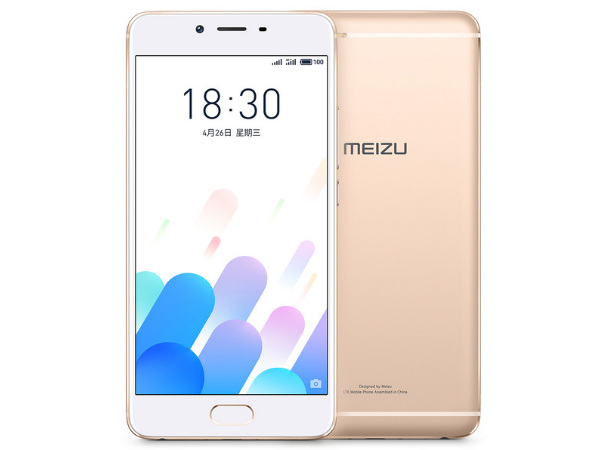
      Meizu launched their latest E series of a smartphone by name Meizu E2 just a few days back. Now, the same device has already crossed 3 million registrations for its first flash sale.

      Meizu E2 first flash sale surpasses 3 million registrations
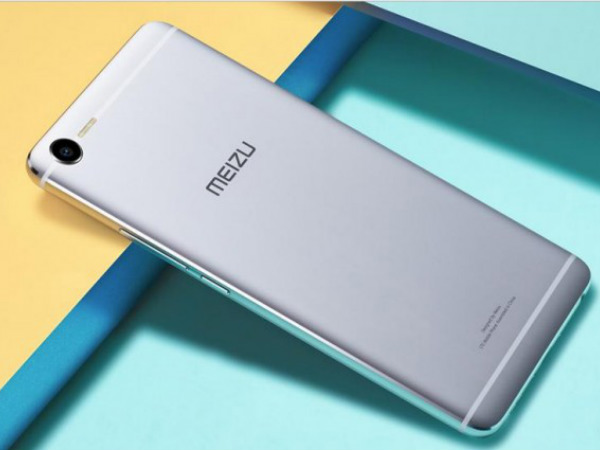
      The Meizu E2 is unveiled with the much-required features which come in almost all mid-range smartphones these days. Such as a fingerprint sensor, 4G VoLTE connectivity, and hybrid dual SIM support. But other than this, they come with four LED flash which is integrated into the antenna line beside the camera. One can consider this as a unique feature which E2 has.
      To easily surpass 3 million registration is not a small deal for any smartphone company. To do this, they should have at least few features which are said to grab the attention of such a large audience. Let us see what such features are.
      Stay tuned to GizBot for more updates!
      Specs and Design

      Specs and Design

      The Meizu E2 is equipped to have an octa-core Helio P20 processor. The device is made available in two storage variants. That is, 3GB RAM with 32GB native storage and 4GB RAM with 64 GB internal storage. The phone runs on Flyme OS 6.0 that is based on YunOS.
      Also Read: Vivo V5s, Meizu E2, LG G6, Galaxy On Nxt 64GB, Gionee M6S Plus and more: Weekly roundup
      The phone is backed by a 3400mAH battery which supports 18W fast charging. It features to have a 5.5-inch 1080p display. The phone comes with a metal body with slightly thick bezels.
      Better camera and swift fingerprint sensor

      Better camera and swift fingerprint sensor

      Speaking of the camera, the E2 has a 13MP f/2.0 sensor with PDAF and four LED flash on the rear and an 8MP selfie shooter in the front. The phone features to have an mTouch fingerprint sensor which is embedded in the home button at the front.
      This fingerprint sensor is capable of unlocking the phone in just 0.2 seconds. It should also be noted that this sensor can be used to make secure payments as well.
      Price and Availability

      Price and Availability

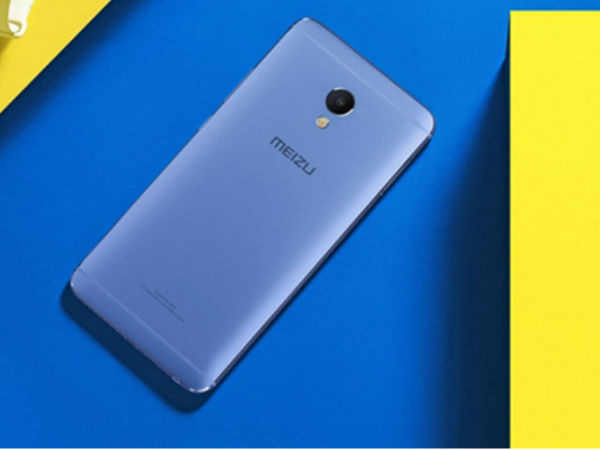
      The phone with so many features are made available in five different colors options- Moonlight Silver, Champagne Gold, and Obsidian Black. It even comes with a special Transformers Edition.


      please follow me.

      Friday, 28 April 2017

      Apple Patent Tips Plans for iPhone Wireless Charging via Wi-Fi Router


      28 April 2017
       
      Apple Patent Tips Plans for iPhone Wireless Charging via Wi-Fi Router
      Photo Credit: USPTO
      US tech giant Apple is experimenting with wireless charging technologies that could see you charge your iPhone with a Wi-Fi router.
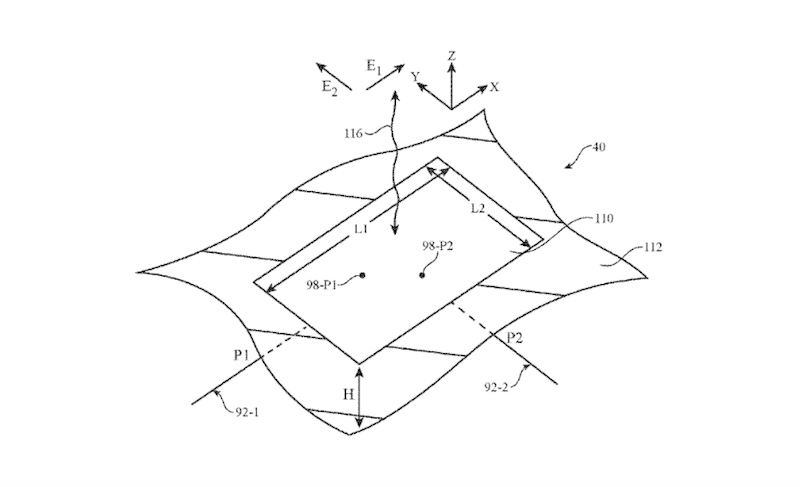
      "Apple's patent application for 'Wireless Charging and Communications Systems With Dual-Frequency Patch Antennas' is a method for transferring power to electronic devices over frequencies normally dedicated to data communications," Apple Insider reported on Friday.
      The patch antennas may be used for wireless power transfer at microwave frequencies or other frequencies and may be used to support millimeter wave communications. The patch antennas may be used to form a beam steering array. The wireless circuitry may include adjustable circuitry to steer wireless signals associated with the antenna array.
      "Apple's patent application merely covers the theory behind wireless power transmission using existing communications link frequencies, and does not divulge specific operating details beyond the implementation of specialized beam forming patch antennas," the report noted.
      apple wireless charging patent apple
      Photo Credit: USPTO
      There have been several reports about Apple finally offering wireless charging as a feature for its iPhone handsets. The company in the recent past was tipped to be using Qi standard inductive wireless charging technology, and recently also joined the Wireless Power Consortium. The Cupertino giant has also been rumoured to be planning wireless charging at a distance, which if true would be a bold entry into the market.

      Rechargeable Nickle-Zinc Batteries Safer Than Lithium-Ion Counterparts, Claim Researchers


        28 April 2017

        Rechargeable Nickle-Zinc Batteries Safer Than Lithium-Ion Counterparts, Claim Researchers
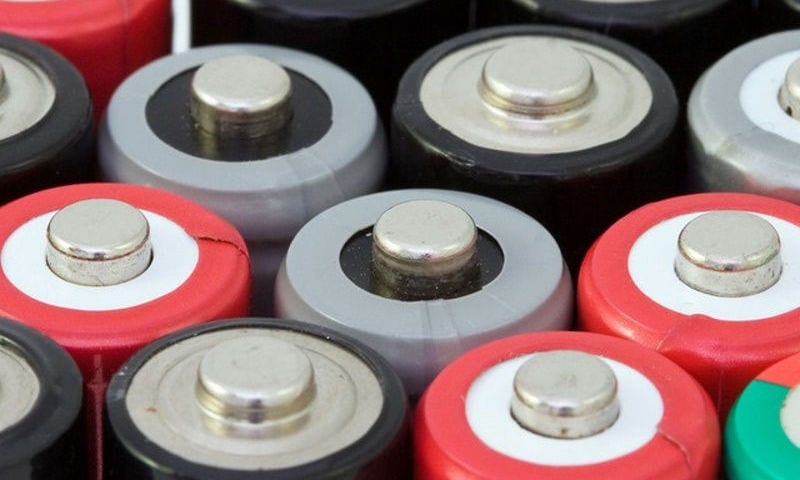
        Scientists have developed a safer alternative to fire-prone lithium-ion batteries, which are common in household devices such as smartphones and laptops.
        Researchers at the US Naval Research Laboratory (NRL) developed the nickel-zinc (Ni-Zn) batteries in which a three-dimensional (3D) Zn "sponge" replaces the powdered zinc anode, or positively charged electrode, traditionally used.
        With 3D Zn, the battery provides an energy content and rechargeability that rival lithium-ion batteries while avoiding the safety issues that continue to plague lithium.
        "The 3D sponge form factor allows us to reimagine zinc, a well-known battery material, for the 21st century," said Debra Rolison from NRL's Advanced Electrochemical Materials group.
        Zinc-based batteries are the go-to global battery for single-use applications, but are not considered rechargeable in practice due to their tendency to grow conductive whiskers (dendrites) inside the battery, which can grow long enough to cause short circuits.

        "The key to realising rechargeable zinc-based batteries lies in controlling the behaviour of the zinc during cycling," said Joseph Parke, lead author of the research paper published in the journal Science.
        "Electric currents are more uniformly distributed within the sponge, making it physically difficult to form dendrites," said Parke.
        With the benefits of rechargeability, the 3D Zn sponge is ready to be deployed within the entire family of Zn-based alkaline batteries across the civilian and military sectors, researchers said.
        "We can now offer an energy-relevant alternative, from drop-in replacements for lithium-ion to new opportunities in portable and wearable power, and manned and unmanned electric vehicles, while reducing safety hazards, easing transportation restrictions, and using earth-abundant materials," said Jeffrey Long from NRL.

        please follow me 

        MXGP 3, MotoGP 17, Ride 2, and Valentino Rossi: The Game Will be Available in India Officially


         28 April 2017

        MXGP 3, MotoGP 17, Ride 2, and Valentino Rossi: The Game Will be Available in India Officially
        Milestone — not to be confused with the erstwhile Indian game distributor by the same name — is an Italian developer of games. It’s known for its racing games such as MotoGP and MXGP that’s labelled as the official motocross game.
        Milestone’s games will now be available in India officially via E-xpress Interactive. The PS4 and Xbox One versions have been listed with the PC variants absent for now.
        Milestone games price list for India

        • Ride 2 - Rs. 1,499
        • MXGP 2 - Rs. 1,499
        • Valentino Rossi: The Game - Rs. 1,499
        • MXGP 3 - Rs. 3,499
        • MotoGP 17 - Rs. 3,499
        The pricing is in line with what you’d expect from new, yet to be released games and older back catalogue titles. Given how well the genre has done in the past, it’s good to see some official support.
        “We are excited to have Milestone on board with us. Through this partnership, we look forward to bring their ever popular games to India” said Amit Khemani, Managing Director, E-xpress Interactive, “We will work on promoting their games while also ensuring to reach out to a massive fan base of racing genre which will be made available at all leading offline and online game retailers in India.”

        Huawei Launches HiKey 960, a Super-Powered Raspberry Pi-Style Development Board


          29 April 2017
        Huawei Launches HiKey 960, a Super-Powered Raspberry Pi-Style Development Board

        Highlights

        • The HiKey 960 is a development board that's very well endowed
        • It bears a HiSilicon Kirin 960 SoC and Mali-G71 MP8 GPU
        • On board is 3GB of RAM, 32GB of flash storage, and a PCIe slot
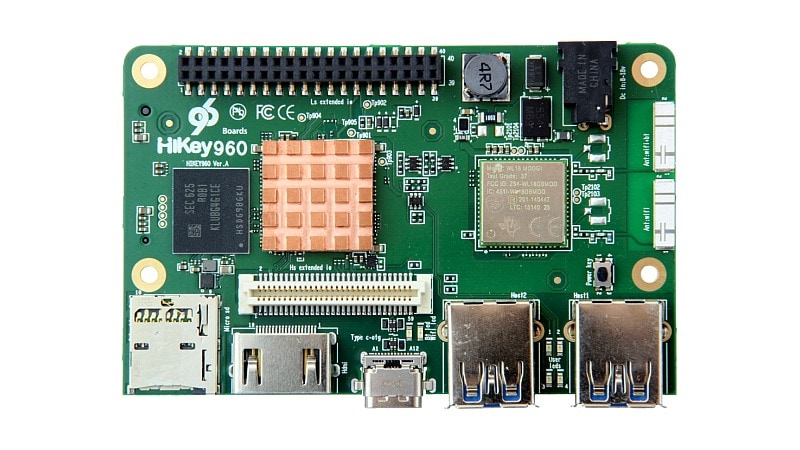
        Huawei, Google, ARM, among others, have collaborated to launch a new single-board development computer similar to the Raspberry Pi, except it's a super-powered alternative that is priced at $239 (roughly Rs.) – to put that in perspective, the Raspberry Pi 3 costs $35. Called the HiKey 960, it's a 96Boards development platform that will go on sale in the US, EU, and Japan in early May.
        The HiKey 960 is powered by an octa-core HiSilicon Kirin 960 SoC with four Cortex-A73 cores clocked at 2.4GHz, and four Cortex-A53 cores clocked at 1.8GHz, coupled with a Mali-G71 MP8 GPU that';s capable of 4K graphics, and 3GB of LPDDR4 RAM. It sports 32GB of UFS 2.1 flash storage and a microSD card slot.
        For connectivity, the HiKey 960 has a HDMI 1.2a port (full-HD), Wi-Fi 802.11 b/g/n/ac (dual-band), Bluetooth v4.1, two USB3.0 Type-A ports, one USB2.0 Type-C OTG port, and a PCIe m.2 connector. It also has two expansion connectors (40-pin and 60-pin) for camera modules to be attached to the board.
        Also on board the HiKey 960 are LEDs for Wi-Fi & Bluetooth, four user LEDs, and a power button. It measures in at 85x55mm.

        The HiKey 960 board was launched by Huawei, a core member of Linaro - an open source collaborative engineering organisation developing software for the ARM ecosystem - and its 96Boards initiative. Other members that contributed to the development of the platform are ARM, Google, Archermind, and LeMaker.
        The HiKey 960 is officially supported as an Android reference board. Linaro in a statement said, "Initial software support for the board is provided in the AOSP source tree based on the Android Common Kernel using the Linux 4.4 kernel release. Linaro and Huawei are also working on the Linux 4.9 based Android Common kernel." PC World notes you can load up to Android 7.1 Nougat on board currently, and points to Google's instructions on how to do it.
        The statement added that while all AOSP developers will find the board useful, hardware-focused developers will find it more beneficial, with avenues like mobiles, digital signage, point of sale, robotics, and others. Notably, Google this week also announced the release of the Google Assistant SDK, which will allow developers to build the voice assistant service into their products. The Google Assistant SDK was claimed by the search giant to be "ideal for prototyping on Raspberry Pi devices", giving us a Google Home style use-case for the HiKey 960.

        Nintendo's New 2DS XL Is Lighter, Sports Improved Design and Larger Display


        Nintendo's New 2DS XL Is Lighter, Sports Improved Design and Larger Display

        Highlights

        • New 2DS XL has 82 percent bigger screen than original
        • It'll be available in Black-Turquoise, or White-Orange colours
        • Launching June in Australia, July in Japan and North America
        Nintendo announced the New 2DS XL late on Thursday, which improves on the original with a foldable design and 82 percent bigger screen. It’s also got additional inputs with a “C Stick” on the front, and "ZL Button" and "ZR Button" on the back. You’ll be able to play the entire 3DS library in 2D, as the name suggests.
        At 260 grams, the New Nintendo 2DS XL is also lighter than the New Nintendo 3DS XL, which weighs 329 grams. It also has built-in NFC support function for Amiibo cards and figures. In Japan, you can also use it to make payments at certain stores.
        The new Nintendo handheld will be available in Black-Turquoise colour, as you can see in the picture above. The Japanese company is also producing a White-Orange variant, though that one will be only in certain regions, it seems.
        “This new addition to Nintendo’s portable hardware line demonstrates our commitment to the hand-held market,” Reggie Fils-Aime, Nintendo of America’s president and COO, said in a statement. “New Nintendo 2DS XL sports a beautiful clamshell design and offers a great balance between price and performance.”
        Speaking of price, the New 2DS XL will cost $149.99 (around Rs. 9,600) in the US, CAD 199.99 (around Rs. 9,400) in Canada, AUD 199.95 (around Rs. 9,600) in Australia and New Zealand, and JPY 14,980 (around Rs. 8,700) in Japan. Nintendo says it’s meant to give consumers a third handheld option that fits neatly, in terms of both pricing and features, between the old 2DS and the New 3DS XL.
        nintendo new 2ds xl mario Nintendo New 2DS XL Mario
        Nintendo will also release new games for the 3DS family on the console’s launch day, in Hey! Pikmin, and Miitopia. Japan is getting more titles on the same day - 100% Pascal Sensei: Kanpeki Paint Bombers, The Snack World: Trejarers, and Ever Oasis.
        The New Nintendo 2DS XL arrives first in Australia and New Zealand on June 15, then Japan on July 13, and US and Canada on July 28. Nintendo has yet to make an announcement for Europe, and as always, it won’t be officially available in India.

        Apple Self-Driving Test Vehicle Spotted on the Roads for the first Time


        Apple Self-Driving Test Vehicle Spotted on the Roads for the First Time
        Photo Credit: Bloomberg

        Highlights

        • Apple is using its Lexus RX450h SUV to test its self-driving technology
        • The car spears to be laden with third-party software
        • Apple got permit for testing its software just two weeks ago
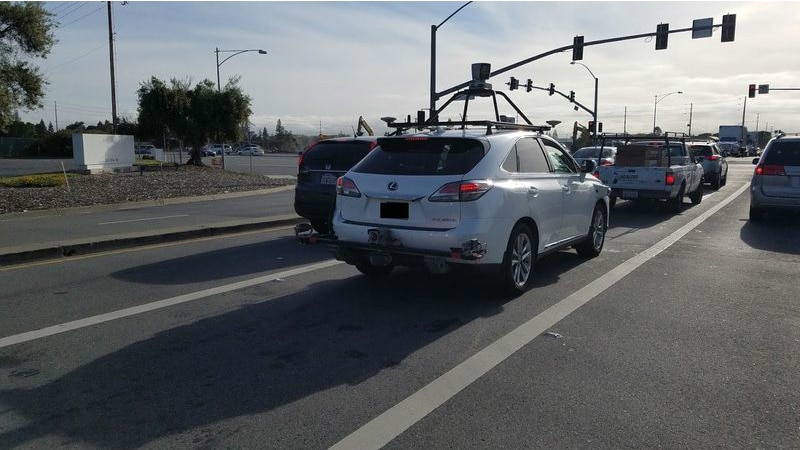
        Soon after it received permit to test its self-driving cars on California roads, Apple is out and about testing its technology already. The Cupertino-giant's self-driving Lexus SUV test vehicle was reportedly spotted on the roads of Silicon Valley.
        Bloomberg was the one to spot it, and it reports that Apple is using a Lexus RX450h SUV to test its self-driving technology. The car was spotted coming out of an Apple facility laden with sensors and kits for testing. Analysts who saw the photos claim that Apple's test vehicle sports third-party sensors from Velodyne Lidar Inc. It was using its "top-of-the-range 64-channel lidar, at least two radars and a series of cameras" that were bought from others rather than custom-made in its labs.
        Two weeks ago, Apple got permission to try out its software on three vehicles on California roads. Apple was earlier reported to build an autonomous car, but it gave up on those dreams, and instead conceptualised 'Project Titan' to concentrate on just building software required for self-driving. It has drastically scaled back its automotive ambitions, leading to hundreds of job cuts and a new direction that, for now, no longer includes building its own car.
        The 'Project Titan' team is currently under the leadership of Bob Mansfield, and Apple is said to now be investing heavily into the study of machine learning and automation software. The iPhone maker joins a long list of carmakers, start-ups and technology rivals, including Alphabet's Waymo that are testing cars on state roads. Apple is looking for new hit products and autonomous car technology is expected to revolutionize the traditional auto industry.

        Samsung Galaxy Note 8 Confirmed to Launch in the second Half of 2017


        Samsung Galaxy Note 8 Confirmed to Launch in the Second Half of 2017

        Highlights

        • Company will stick to regular launch timing for Galaxy Note 8
        • Samsung's mobile chief confirmed that Note series has not been killed off
        • Galaxy Note 7 smartphone was launched in August last year
        In January this year, Samsung's mobile chief DJ Koh surprised everyone by confirming that the company will be releasing the sequel to last year's Galaxy Note 7 despite the infamous explosion incidents that tarnished the name of the series. Now, as per the company's first quarter financial report, it seems like Samsung will be releasing the Galaxy Note 8 in the second half of 2017.
        Samsung announced its quarterly results for the quarter ended March 31 on Thursday and as part of its announcement, the company mentioned that it will be releasing a "new flagship smartphone in the second half [of 2017]," in its press release. Notably, this sits well within the regular launch timeline for the Note series smartphones as Galaxy Note 5 was launched in August 2015 and Galaxy Note 7 was launched in August last year.
        This particular statement from the company indicates that it has decided to stick to its regular launch time frame instead of rushing with its upcoming Galaxy Note 8 smartphone despite the absence of its predecessor device in the market. However, this should come as a relief to customers as in case of Galaxy Note 7 the company ended up bungling on some product safety aspects by pushing for an earlier release, which was speculated to be motivated by the desire to get the smartphone into more users' hands ahead of the release of Apple's 2016 iPhone models.
        Usually the South Korean company announces its Note series flagship smartphones ahead of Apple's smartphones but makes them available much later in the year. As the company's apparent impatience with the Galaxy Note 7's release is what's thought to have caused faulty batteries to pass through to customers, it can be deemed a wise move on Samsung's part not to rush the release of the next Note series flagship.
        While there were speculations earlier that the Note series of smartphones might be killed off by Samsung due to the bad name associated with it, the statement from DJ Koh indicated that the company might not be done with the device after all. It will be interesting to see how the company will approach the device launch and release this time around.

        Thursday, 27 April 2017

        Samsung Galaxy S8 Red Tint Display Issue Fix Is Now Rolling Out


        Samsung Galaxy S8 Red Tint Display Issue Fix Is Now Rolling Out
        Photo Credit: KoreaHerald

        Highlights

        • Samsung said that the red tint was not hardware issue
        • The update is currently rolling out to users in South Korea only
        • Some users have reported that the issue was fixed post update
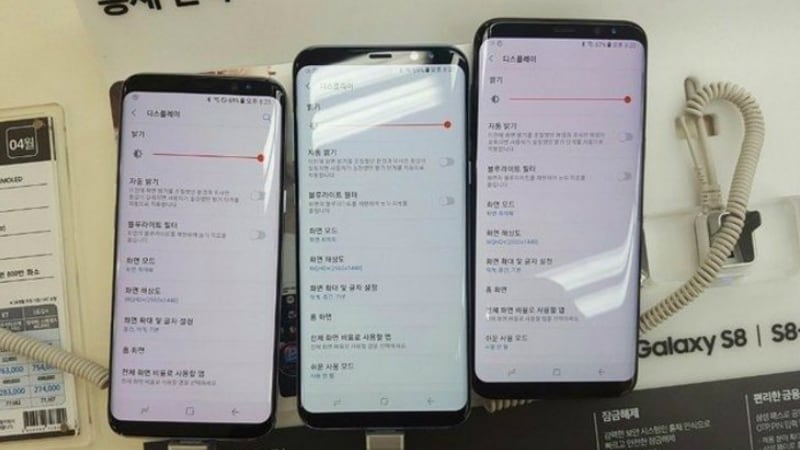
        Last week, Samsung confirmed that the company will be rolling out the fix for the red tint display issue plaguing some units of the smartphone, and more recently, said the update would be rolled out this week. Staying true to its word, the South Korean company has now started rolling out the update in its home country and has even said that those users who are not satisfied with the display even after updating will be issued a replacement device.
        The latest update for the Samsung Galaxy S8 and Galaxy S8+, with firmware version G950NKSU1AQDG or G950NKSU1AQDG, provides users with more options to tune colour temperature and fix the issue, as pointed out in a report by Sammobile. With the update, users get the 'Full Screen Colour Balance' option in the Adaptive Display screen mode and also a 'Screen Edge Colour Balance' option in Screen Mode menu.
        Some users have already reported that their device's display seems to work perfectly fine after the update but some others (from countries other than South Korea) have not received the update as of now.
        Notably, earlier this week, Samsung claimed that the red tint was caused due to a feature in the phone and was not a hardware issue with the device. The company reiterated the same thing at its earnings call on Wednesday.

        The company tried to initially downplay the issue and even said that users can fix the red tint by themselves from the display settings. However, some of the users who got early hands on the device complained that despite adjusting the red colour to the lowest setting, the tint issue didn't go away. Other issues the company has promised updates for are a Wi-Fi issue, and a Device Quality Agent issue.
        In an announcement to its service centres last week, the company was quoted as saying, "There will be an additional update to make colour revisions more minutely at the end of April."
        As the company was able to meet its rollout timeline for the home country, the update should be expected by users in other regions soon as well.